
5 Gentle and Easy Ways to Organize Your Home When You Feel Overwhelmed
Inside: Discover five gentle and easy ways to organize your home when you feel overwhelmed.
A guest post by Rose Morrison
When your home is cluttered, getting organized can feel like an overwhelming task.
You may look around and see piles, overflowing closets, and countertops covered with things that need to be addressed. The more you notice, the more overwhelmed you feel and the easier it becomes to avoid it.
If you’ve been there, you’re not alone.
The good news is that you don’t have to organize your entire home in one day. In fact, trying to do too much at once can make the process feel even more daunting. A gentler approach can be much more effective, especially when you’re already busy.
Instead of focusing on everything that needs to be done, start with one small area, one simple decision, or a few minutes of focused effort. Small wins can help you build momentum without adding more stress to your day.
In this post, we’ll look at five gentle and easy ways to organize your home when you’re feeling overwhelmed, so you can make progress at a pace that feels realistic and sustainable.

5 Ways to Organize Your Home When You Feel Overwhelmed
Try some of these ways to organize your home when you’re feeling overwhelmed.
1. Stop Before You’re Tired
Although 54% of Americans agree they feel overwhelmed by the amount of clutter they have, 78% don’t know what to do with it. If you’re one of them, forcing yourself through a long organizing session may not be the best way forward.
The problem isn’t always a lack of motivation. Sometimes, you’re simply asking yourself to make too many decisions at once.
Should you keep that old sweater? Where should that random kitchen gadget go? Can you donate those shoes you never wear? What do you do with the things you’re not sure about?
A study found that decision fatigue increased when people had more choices to consider, with participants describing the process as more cognitively taxing and unpleasant.
That gives you a good reason not to push yourself until the timer runs out or the room is finished. Soft decluttering means treating the process as something you can do gradually.
Instead of using a 15-minute timer to see how much you can accomplish, use it as a boundary that protects some of your energy.
If you reach the end and still feel like you could keep going, stop there. You’ll leave yourself with enough mental bandwidth to make better decisions later, while teaching yourself that organizing doesn’t have to end in exhaustion.
Think of it like training for a run. You wouldn’t sprint until you couldn’t physically continue and then expect yourself to look forward to the next session.
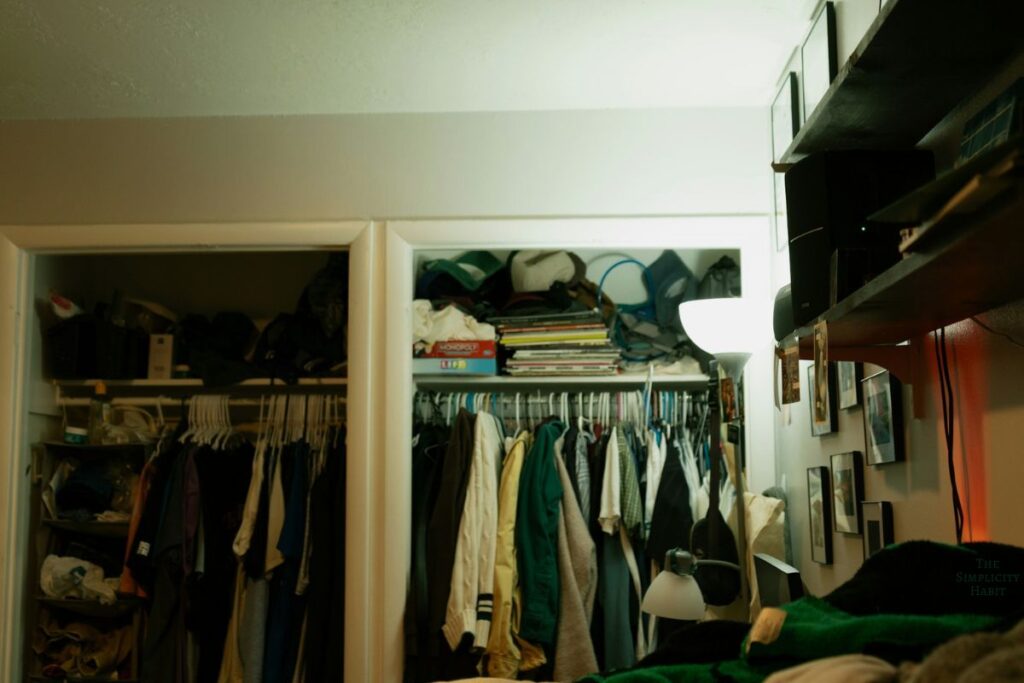
2. Create Mess-Tolerance Zones
Your home has to accommodate your actual life, not an imaginary version of it where bags always make it to the cupboard, and nobody ever drops their shoes by the door.
Trying to eliminate every trace of everyday mess leaves you constantly tidying. That’s why it’s a good idea to give some of the mess a designated place to land.
A mudroom is a good example of how this can work. It gives everyday items such as shoes, bags, and keys a place, which helps keep them from spreading into your hallway or living room.
You can borrow the same idea even if you don’t have a spare closet or room. A basket by the stairs can catch things that need to go upstairs, and a tray near the entrance can give keys and other small essentials a home.
The important thing is that you’re containing a recurring mess. You’re acknowledging that certain things will always end up out of place and deciding in advance where they can go, so you can enjoy less visual and mental noise.

3. Climb the Emotional Weight Ladder
If you find it hard to start decluttering when you’re overwhelmed, begin with an item.
You may be tempted to begin with whatever takes up the most space, but physical size doesn’t tell you how difficult an item will be to let go of. A tiny necklace from your grandmother can require far more emotional energy than an entire drawer of expired batteries.
Research into object attachment shows that possessions can become intertwined with feelings of comfort, security, and identity, which helps explain why some things are much harder to let go of than others.
Even when you know you no longer need something, your attachment to it can make getting rid of it feel much bigger than the object itself. Give yourself an easier starting point by gradually working toward the belongings that require more emotional capacity.
Use the emotional weight ladder:
- Emotional weight of zero: Begin with expired pantry items, junk mail, trash, and genuinely broken things.
- Emotional weight of three: Try clothes that no longer fit, duplicate kitchen tools and gadgets you never use.
- Emotional weight of seven: Move unwanted gifts, inherited belongings, and items you keep mainly because letting go makes you feel guilty.
- Emotional weight of 10: Save photographs, heirlooms, childhood artwork, and deeply sentimental possessions for when you’re ready.
Start at zero and work upward. The easy decisions give you practice before you reach the belongings that can make decluttering feel emotionally exhausting.
Plus, there’s no rule saying you have to reach emotional weight 10 during the same session.
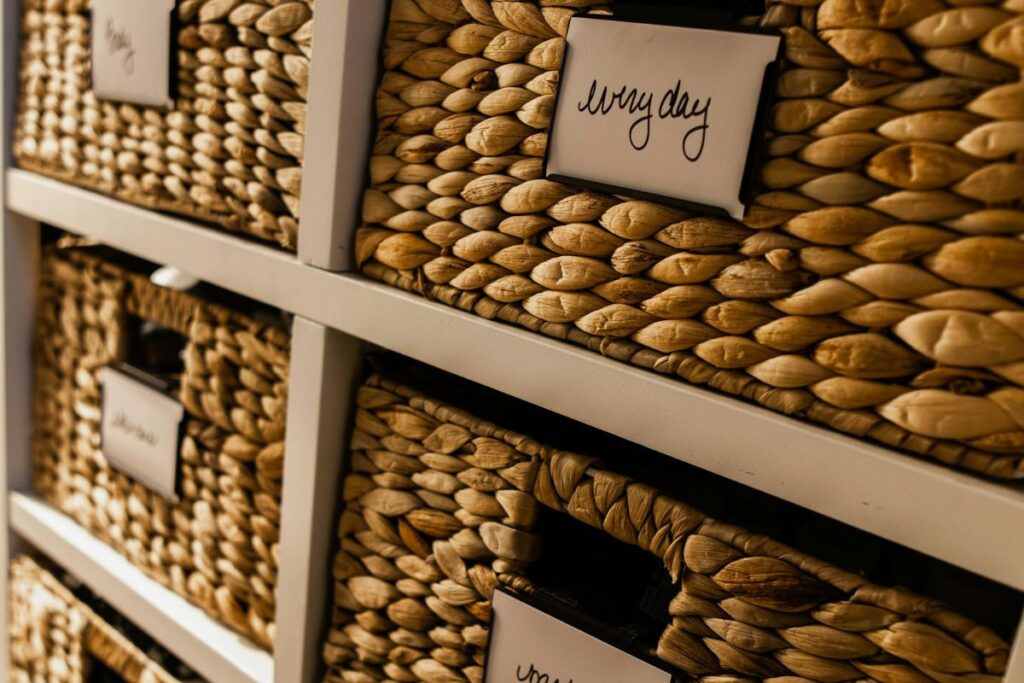
4. Move Like a Butterfly
When your mind is crowded, a long checklist can feel insurmountable. Physical clutter can contribute to stress and anxiety, so adding a rigid system on top of it may leave you feeling even more stuck.
The Sunday Butterfly Method by Lydia Hayman is a great addition to your gentle decluttering routine. It gives you room to move according to your attention, mood, and energy, which is especially useful for people with ADHD or those who find themselves splitting attention between tasks.
Challenges with executive function and working memory can make it difficult to stay with one task from beginning to end. Quick changes between manageable jobs may work with that tendency and help you avoid unnecessary frustration.
You can start with the most visible clutter, such as a kitchen counter or entryway, then follow the next task that naturally presents itself.
Keep a basket nearby for misplaced items and a cleaning caddy stocked with essentials so you can move around without constantly stopping to gather supplies. Although it’s called the Sunday Butterfly Method, any day that suits your schedule works.
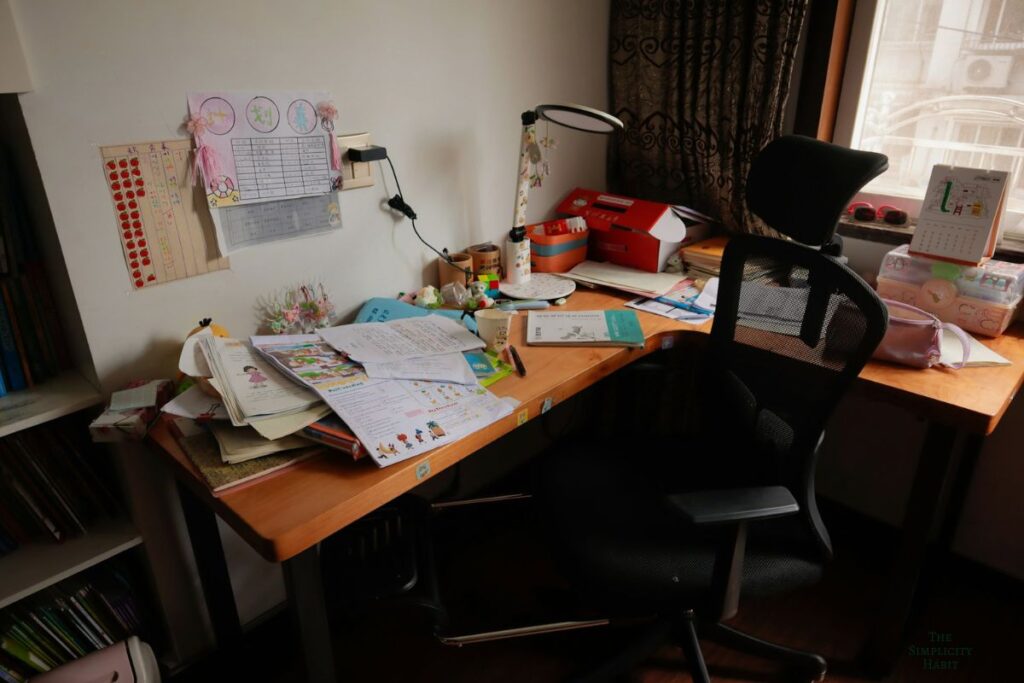
5. Use the Two-Foot Drift Rule
Figuring out where to start is half the battle when your whole room is messy. The Two-Foot Drift Rule gives you an easy place to do it. Pick about two feet of space that you use a lot, such as the spot beside your bed, the kitchen counter around the sink, or your bathroom vanity.
Then ask yourself what that little area needs. You may need to throw a few things away, put some items back where they belong, or give the surface a quick wipe.
You may realize you only have energy for one small area that day. That’s okay, as the point is to make progress.
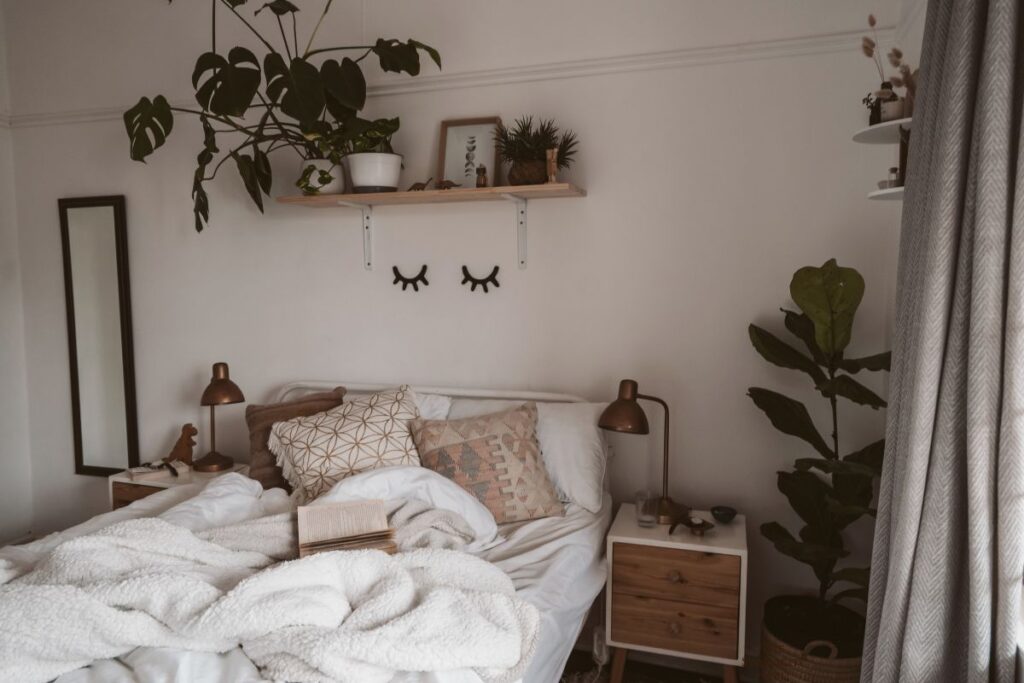
Having a clear bedside table, for instance, can make getting ready for bed a lot nicer. Since you use the spot often, you get to enjoy the result right away. Once that area looks good, you can stop or pick another two-foot spot when you’re ready.
Bonus Tips to Make Organizing Easier
You don’t need a complicated system to make organizing when you’re overwhelmed easier. Give yourself a few simple rules to take some of the pressure off, such as:
Write yourself a permission slip: You can literally write, “I’m allowed to stop,” “I don’t need to keep this out of guilt,” or “My home doesn’t have to be perfect.” These reminders can help loosen the perfectionism that makes ordinary organizing decisions heavier than they need to be.
Ask “Would I buy this again?”: When you’re unsure about an item, this question can help you consider its current value to you. If you wouldn’t spend money on it today, you may have a useful clue about whether it still deserves space in your home.
Follow your energy: Use low-energy moments for tossing trash, clearing counters of clutter, or moving belongings to their proper rooms. Save complicated sorting and sentimental decisions for times when you have more mental capacity.
Give Yourself a Reset, Not a Deadline
The key to gentle decluttering is to start small enough that you can actually follow through. Clear the bedside table, sort one basket, or deal with the two feet of space in front of you, then stop when you’ve had enough.

What are your tips to organize your home when you feel overwhelmed? Share them in the comments section below.
Sign up on the form below to get weekly decluttering and simplifying inspiration sent straight to your inbox. You’ll also get the free 8 Quick Wins for Decluttering Worksheet to help you start to simplify your life today.

Join the List
Stay up to date & receive the latest posts in your inbox.