Maximalist to Minimalist Method: 5 Steps to Take Your Space from Stuffed to Calm
Inside: Use the maximalist to minimalist method to take your space from stressed and stuffed to clear and calm.
A guest post by Peter Chambers
Life has a way of filling our homes faster than we realize.
A few impulse purchases here. A stack of items waiting to be dealt with there. Things we meant to organize, donate, or put away eventually. Over time, those small additions can add up, leaving our spaces feeling crowded, stressful, and difficult to manage.
If you’ve ever looked around your home and thought, “How did I end up with so much stuff?” you’re certainly not alone.
Many people find themselves living in spaces that feel overfilled, not because they intended to accumulate clutter, but because life happened. Busy schedules, changing seasons, family needs, and years of postponed decisions can gradually transform a calm home into one that feels stuffed and overwhelming.
The good news is that you don’t have to become an extreme minimalist to experience the benefits of owning less.
Creating a calmer home isn’t about getting rid of everything you own. It’s about being intentional with what you keep and making space for the things that truly support your life.
The journey from maximalist to minimalist doesn’t happen overnight. In fact, the most lasting transformations often come from small, thoughtful steps rather than dramatic decluttering marathons.
When you approach the process with patience and purpose, you can create a home that feels lighter, more peaceful, and easier to maintain—without the stress of trying to do it all at once.
In this post, we’ll walk through the maximalist-to-minimalist method using five practical steps to help you take your space from stuffed to calm. These simple strategies can help you create more room for what matters most.
When More Stops Feeling Good
Maximalism isn’t a problem in itself. The trouble comes when an intentional aesthetic quietly tips into unmanaged accumulation.
It happens gradually, with a “just in case” purchase here and an inherited item you didn’t really want there. Before long, your home is holding a lot more than you ever consciously chose to keep.
Living in a cluttered environment has real effects on how you feel day to day. People who believe their homes are cluttered tend to experience higher levels of the stress hormone cortisol, lower mood, and less restful sleep compared to those who feel their spaces are under control.
Beyond aesthetics, clutter competes for your attention even when you’re not actively looking at it, creating a low-level mental load that’s easy to underestimate.
The EPA estimates that Americans dispose of more than 12 million tons of furniture annually, with 80% ending up in landfills, illustrating just how normalized accumulation has become. You don’t have to be part of that cycle.
What Purposeful Decluttering Actually Means
Purposeful decluttering is the practice of making intentional, honest decisions about which items stay, based on whether they genuinely serve your life right now. You don’t have to strip your home bare or force yourself into a style that doesn’t suit you. Instead, purposeful decluttering is about clarity.
Look at everything in your home and ask whether it’s something you deliberately chose and that adds value to your space, or if it’s something that ended up there over time without an intentional decision being made.
Purposeful decluttering also means being honest about “someday” items, such as the bread maker you’ll use one day again or the stack of magazines you’ll eventually read. If the day never comes, these things are just using up physical and mental space.

The Minimalist Mindset
At its core, minimalism means being intentional about what you bring into your home and your life, and prioritizing quality and meaning over quantity.
When you start thinking this way, you stop asking “where can I put this?” and start asking “does this actually earn its place here?” That shift changes how you shop, how you decorate, and how you maintain your home.
Multiple studies have found that people who adopt a minimalist approach to their possessions report higher levels of happiness, lower stress, and greater control over their lives. Removing the things that were quietly weighing you down gives the things you actually love more space.
The mindset can change how you approach new purchases. Instead of buying first and finding room later, you evaluate whether something will genuinely earn a permanent spot. A good rule of thumb is to wait 48 hours before buying anything nonessential.
If you want it after two days, it’s likely a considered choice rather than an impulse. Intentional decorating often involves leaning on a few quality anchor pieces rather than filling every surface.
Minimalism pairs especially well with transitional periods in life, such as a new home, a new city, or a fresh chapter. Filling a space with permanent purchases before you know what you need tends to generate exactly the kind of clutter you’re trying to avoid.
Maximalist to Minimalist Method: 5 Practical Steps to Start Today
Here are some ways to use the maximalist to minimalist method in your home.
1. Pick One Small Area and Begin There
Trying to do your whole home at once is the fastest route to burnout. Start with decluttering a single drawer, a bathroom cabinet, or a countertop.
The momentum from one small win can carry you further than you’d expect.
2. Use the Keep, Donate, or Discard Method
Each item can stay, go to someone who’ll actually use it, or get discarded. Try to avoid a “maybe” pile, which can end up creating more clutter.
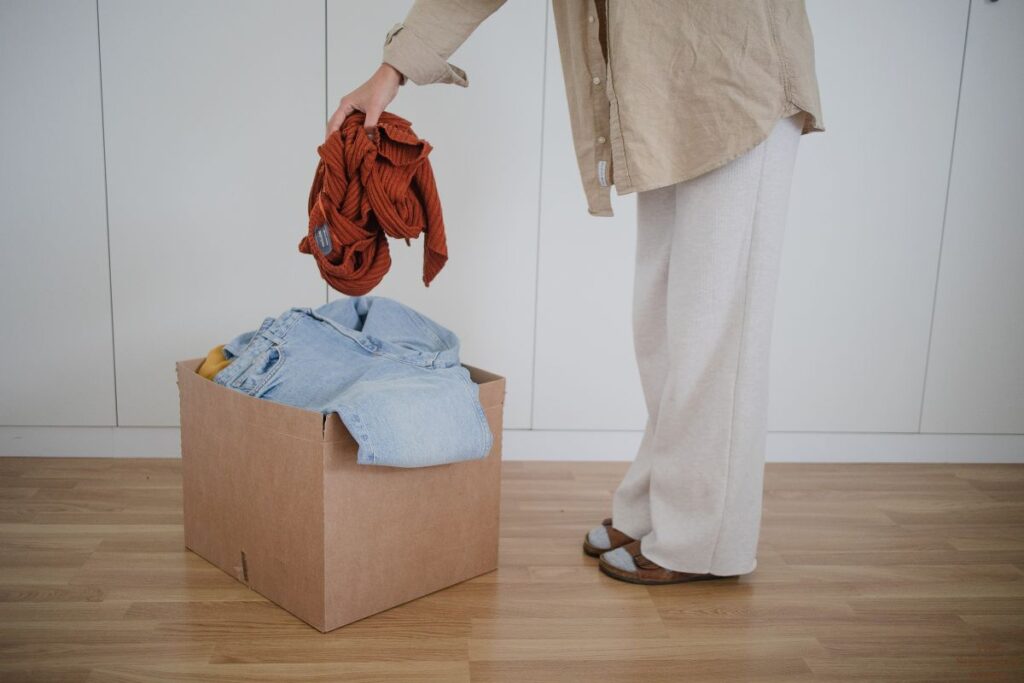
But if you really can’t decide on what to do with something, box it up and set a date for three months from now. If you haven’t needed the item by then, let it go.

3. Work in Categories, Not Just Rooms
Clothes are spread across multiple wardrobes, and you may have duplicate kitchen gadgets.
Tackling by category rather than by room helps you see the full picture of how much of something you actually own.
4. Permit Yourself to Let Go of Sentimental Items
It can be most difficult to part with sentimental items, and there’s no rush to do so. But it’s worth asking whether you’re keeping something because it genuinely brings you joy or because you feel obligated to.
You are not required to hold on to every gift, every memento, or every object from your life.
5. Introduce a One-in, One-out Rule
Once you’ve reached a decluttering point you’re happy with, this simple habit keeps things from drifting back. When something new comes in, something else must leave. For example, a jacket you’ve outgrown can be donated when you purchase a new one.
Want to simplify even more? Try the one-in, donate two rule. The rule can be as flexible or strict as you’d like.
A Home That Works for You
Decluttering is about creating a home that feels right for how you actually live. It supports you rather than quietly draining you.
Whether you end up with a space that is spare and simple or a more curated version of the home you already love, the outcome is the same. A space where you can more easily breathe is entirely within reach, and you can start with just one drawer.

Peter Chambers brings over 5 years of interior design expertise from his role as associate editor at Renovated, where he’s made a mission of proving that impactful home transformations don’t require designer price tags. He specializes in helping readers edit their spaces thoughtfully, so they can keep what matters, enhance what works, and simplify the rest.
What are your thoughts on the maximalist to minimalist method? Let us know in the comments section below.
Sign up on the form below to get weekly decluttering tips sent straight to your inbox. You’ll also get the free Your Home Decluttered Jumpstart which includes 100 easy items to declutter and 12 high-impact areas to declutter in 10 minutes.
Today I read a Substack post about the joys of thrifting, particularly the high the writer gets from shopping in Goodwill bins. It amazes me that thrifting has become a grown up’s pleasurable past-time, something to do every Saturday afternoon similar to how we looked forward to movie matinees as teens. I posted this in response to the post on the high of thrifting.
“I still haven’t figured out how to tell friends that I don’t want the items they unearthed from the back of their closet. I was given one such item today, a gigantic jewelry box. Why? Because last week this dear friend made me 5 pair of earrings. When I said I have a travel jewelry bag for earrings she decided I must have her ex-mother-in-law’s jewelry box given to her nearly 40 years prior that lived in the back of her closet because she didn’t want it. I end up putting a LOT outside for neighbors to grab including the jewelry box which went out my door five minutes after my friend left my apartment. After seriously decluttering and being devoted to keep clutter at bay, the last thing I need is an empty jewelry box taking up 30% of the real estate on my small bedroom dresser. No thrifting for me. Not digging through bins of junk seeking bargains for the sake of finding bargains.”
The easiest way to declutter is to have to pack everything your family owns in preparation to move 1000 miles.
I’m packing up a 2400 sq ft house to move to 1006 sq ft senior apartment . It’s challenging and exhausting but I know when we are done, both my husband and I will be happier with the decision we made to reduce our lifestyle. Very eager to get to our decluttered end state.
Amen Amen and Amen
When in doubt, throw it out. Less is best.
I like the 5 steps. I have been trying to declutter for months and every time I feel like have made three steps in front, I take five steps back by buying and keeping another bunch of useless things. Honestly having kids doesn’t help. Half the things I feel like I could toss out, I keep because I know the kids can play with them, not their actual real toys.
The consolation I have is that it is a journey. I’ll keep trying until I get it right.
as per sentimental items, if you are loath to donate or otherwise divest yourself of them, perhaps take a photo and keep a memory book to look back at them. a photo book is likely much smaller than the items you might keep.
I have just started trying to work my way through a house that was almost 3 households in 1. Let me explain that to start. My oldest son passed and I moved into his house and it was completely furnished(hardest thing i ever had to do in my life), then I had my own furniture, and my old roommate gladly had more furniture delivered as he was redoing his house. So needless to say my daughter & I was completely overwhelmed. We were making the best decisions we could on what matched and what didnt with the biggest pieces of furniture first. We have found this process here and have just started going through boxes. As we go through stuff we dont leave it at the house we take it within a day or 2 and get rid of it. If its throwing it out. We are taking the trash out a couple times a week so there’s no take backs! If its something someone else in the family can use, then we will text or call them. We still have a long way to go, but at least we are clearing a path. Thank you for sharing